
Copper vs Aluminium Alloy Solar Cable: Cost, Weight and Performance
When copper prices rise, the cable budget of a large PV plant can increase sharply. Aluminium alloy solar cable is becoming a practical alternative for main DC and AC feeders. This guide compares the two options.
What is aluminium alloy PV cable?
It uses a compacted AA-8000 series aluminium alloy conductor instead of copper, with the same halogen-free cross-linked insulation and sheath as a standard PV cable. The alloy has much better creep resistance than pure aluminium, so terminations stay tight over time when the correct lugs and torque are used.
Comparison
- Conductivity: aluminium alloy has about 61 % of the conductivity of copper, so a larger cross-section is needed for the same current (typically one or two sizes up).
- Weight: even after upsizing, an aluminium alloy cable is roughly half the weight of the equivalent copper cable — easier to transport and pull.
- Cost: material cost is significantly lower, and less sensitive to copper price swings.
- Installation: use bi-metallic or aluminium-rated connectors and lugs, and follow the connector supplier's instructions.
Where it makes sense
Aluminium alloy is most attractive for long DC feeders and AC collection cables in utility-scale solar farms and energy storage projects. For short string cables connected to MC4-type connectors, tinned copper remains the standard choice.
Certification
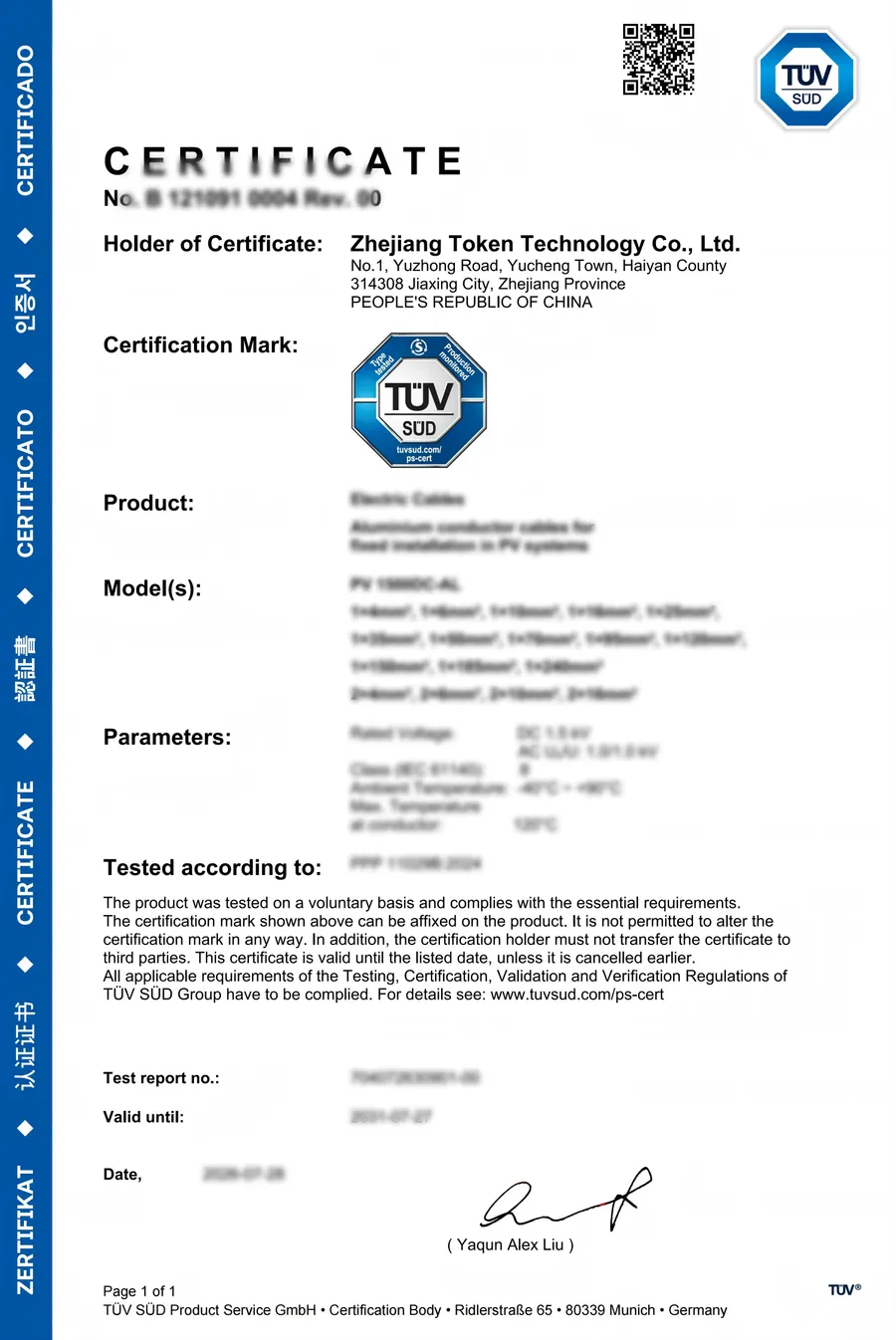
TKG CHINA's aluminium alloy conductor PV cable, developed to PPP 11029B:2024, has passed a full series of performance tests and obtained German TÜV product certification. It has already been pilot-installed in multiple projects. View the product or ask our engineers to calculate the right size for your project.
Envíenos su lista de cables o planos. Nuestros ingenieros le responderán con la mejor solución y precio en menos de 12 horas.